
THCA Guides
How to Choose THCA Flower: Quality, COAs and Freshness
Aug
Learning how to choose THCA flower means looking beyond a strain name or a single potency number. A useful comparison considers the flower’s condition, package information, batch-specific laboratory report, available size and the seller’s storage and shipping practices.
No photograph, aroma description or cannabinoid percentage can answer every quality question by itself. Use several signals together, confirm that the product is intended for adults 21 and older, and check the laws that apply at your destination before ordering.
Start With the Product Identity
First, make sure the listing clearly identifies what you are comparing. Look for the product name, strain or flavor profile, listed weight, flower tier, package format and available batch information. If a product page offers multiple sizes, confirm the selected size again in the cart before checkout.
At Hidden Hills, the main flower collection is organized into several groups:
These groupings help organize the catalog, but a tier name is not a laboratory result. Compare the exact product, package and batch rather than assuming that price or category alone determines potency, freshness or personal preference.
Evaluate Appearance Without Treating It as Proof
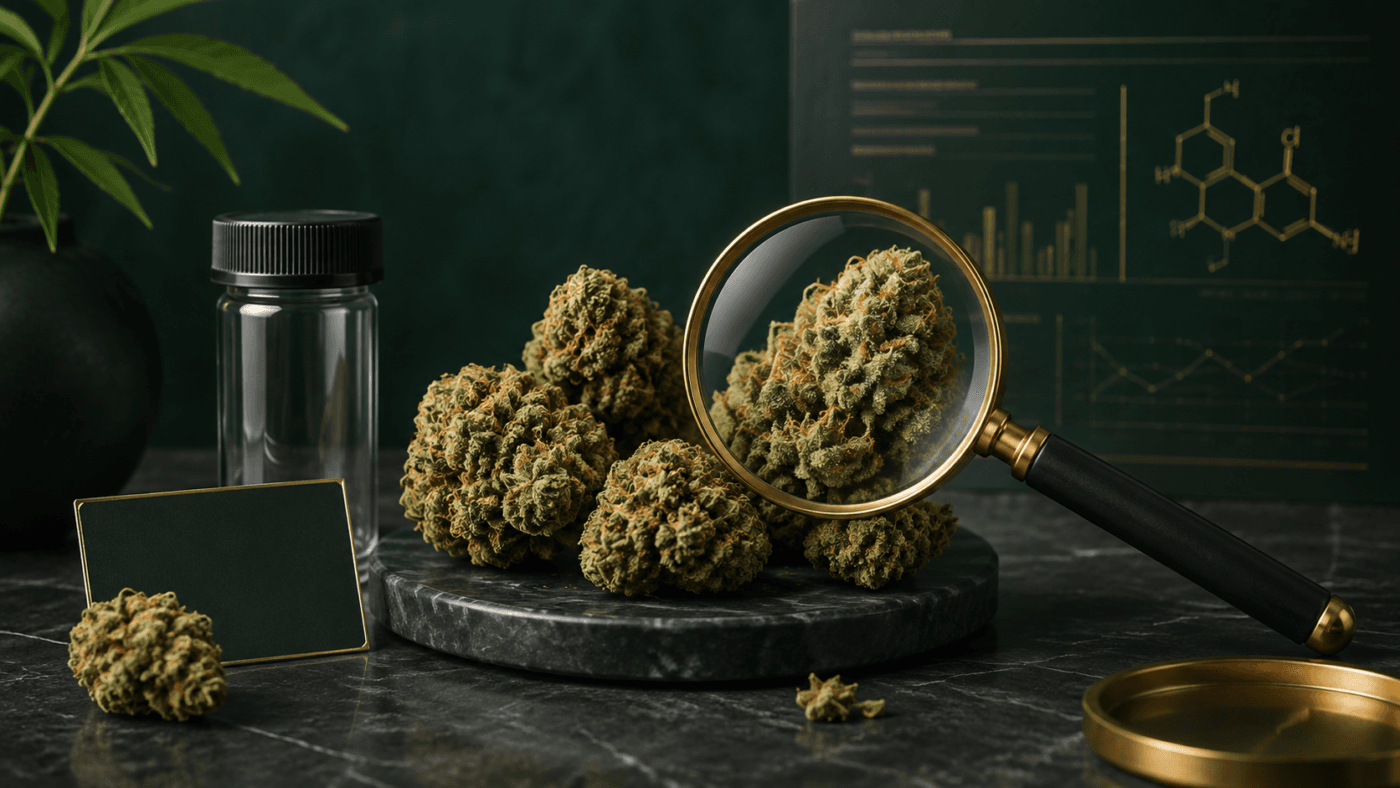
Product images can help you compare bud structure, trim and general appearance. They cannot confirm cannabinoid content, terpene concentration or the absence of contaminants.
When the delivered package arrives, look for flower that is consistent with the listing and free from obvious signs of damage or contamination. Concerning signs can include visible fuzzy growth, unusual discoloration, foreign material, an unexpectedly wet or clumped texture, or a broken seal. Do not use a product that appears contaminated or materially different from what was ordered. Retain the packaging and contact support.
Trichomes, color and density naturally vary by cultivar, growing conditions and post-harvest handling. Large buds are not automatically stronger, and smaller buds are not automatically lower quality. Smalls may provide a different size and price format while coming from the same named cultivar or harvest family; verify the individual listing and batch documents.
Use Aroma as a Description, Not a Potency Test
Aroma descriptions can help shoppers identify profiles they may prefer, such as citrus, fruit, fuel, earth, spice or dessert-like notes. However, a name or scent description does not prove which terpenes are present or at what concentrations.
If a laboratory report includes a terpene panel, use it as additional information. If it does not, treat the product description as sensory guidance rather than a quantified result. An unexpected musty, chemical or otherwise abnormal odor after opening is a reason to stop and contact the seller, especially when combined with visible damage or moisture.
Match the Certificate of Analysis to the Batch
A Certificate of Analysis, commonly called a COA, is most useful when it belongs to the exact product and production batch in your package. Before relying on a report, compare:
- Product or sample name
- Batch, lot or sample identifier
- Laboratory name
- Test and report dates
- Sample type or matrix
- Reported cannabinoid results
- Contaminant panels and pass/fail findings, when included
Do not treat a report for another strain, product format or batch as interchangeable. Visit the Hidden Hills Certificates of Analysis page and match the report to the package whenever possible. If you cannot make a confident match, contact Hidden Hills support before relying on the document.
What should a flower COA show?
The scope of testing depends on the laboratory and applicable rules. A report may include cannabinoids, terpenes, moisture or water activity, pesticides, heavy metals, microbial impurities, mycotoxins and foreign material. The California Department of Cannabis Control lists these among the testing categories used in California’s regulated cannabis market. That state program is a useful example of the kinds of information laboratory testing can address, but it should not be treated as a statement that every hemp report follows the same panel or standard.
Check which tests were actually performed. A cannabinoid-only report does not establish that a batch passed contaminant testing.
Understand THCA, Delta-9 THC and Total THC
THCA and delta-9 THC are related but distinct cannabinoids. Heat can convert THCA into delta-9 THC through decarboxylation. For a fuller explanation, read THCA vs THC: What Is the Difference? or start with the broader What Is THCA? guide.
On many reports, total THC accounts for both measured delta-9 THC and the potential contribution from THCA. A commonly used calculation is:
Total THC = delta-9 THC + (THCA × 0.877)
The conversion factor accounts for the molecular mass lost during decarboxylation. USDA guidance requires hemp testing to consider the potential conversion of THCA when reporting total available THC. Always read the report’s notes, units, method and measurement uncertainty instead of comparing only the largest number.
Do Not Choose Flower by Potency Alone
A higher cannabinoid percentage does not automatically mean better flower. Laboratory values can help characterize a batch, but they do not describe every part of product quality, aroma, condition or individual response. Results also carry measurement uncertainty, and comparisons are most meaningful when the reports use clearly stated methods and units.
A balanced comparison includes:
| Quality signal | What it can tell you | What it cannot prove |
|---|---|---|
| Product images | Visible structure, trim and presentation | Potency, freshness or contaminant status |
| Aroma description | Intended sensory profile | Exact terpene content or effects |
| Cannabinoid panel | Reported cannabinoids in the tested sample | Every aspect of quality or personal response |
| Contaminant panel | Results for the substances actually tested | Untested substances or another batch |
| Package and batch details | Identity, traceability and timing | Condition after improper storage or handling |
Check Freshness, Packaging and Storage Information
Post-harvest drying, packaging and storage influence the condition of flower. Scientific reviews describe drying as an important step for reducing moisture before storage and note that temperature, light, oxygen and storage conditions can affect cannabinoids and volatile compounds over time.
Before ordering, look for a package or test date when available and review the seller’s storage guidance. When the order arrives:
- Confirm that the seal and container are intact.
- Compare the product and weight to the order.
- Check the batch or lot identifier.
- Inspect for unexpected moisture, extreme dryness, contamination or damage.
- Store the closed package in a cool, dry, dark location away from heat and direct sunlight.
- Keep all products secured away from children, pets and anyone under 21.
Do not add water or other household substances to flower. Do not use a product with visible mold or a compromised package.
Compare Weight and Price Fairly
Compare the price for the same listed weight, not just the lowest displayed price. A product page may offer 3.5-gram, 7-gram or 28-gram options, and each option can have its own price and availability.
Also compare what is documented: current photos, package format, batch COA availability and the seller’s damaged-order policy. A lower price may reflect bud size, catalog tier, packaging or promotion; it should not be interpreted automatically as a laboratory quality rating.
Red Flags to Avoid
Pause before purchasing when a listing:
- Makes disease-treatment or guaranteed-effect claims
- Claims that a product is legal everywhere
- Uses a COA that cannot be matched to the product or batch
- Shows cannabinoid results without identifying the laboratory or sample
- Does not clearly state the product weight
- Promises quality based only on a strain name, image or unusually high percentage
- Provides no way to contact the seller about a damaged or mismatched order
Federal, state and local rules can change and may differ by destination. Review the current shipping policy and your local requirements before ordering. Shipping availability is not a guarantee that possession or use is permitted in every location.
A Quick THCA Flower Buying Checklist
- Confirm that you are 21 or older and eligible to order at the destination.
- Select the exact flower product and weight.
- Review the images and description without treating them as laboratory proof.
- Find the COA and match the product and batch identifiers.
- Read the cannabinoid panel, units and total THC information.
- Check which contaminant panels were actually completed.
- Review package, test or harvest timing when available.
- Compare price for the same weight and catalog tier.
- Read the shipping, damage and return terms.
- Inspect the sealed package when it arrives and contact support if anything is wrong.
Frequently Asked Questions
What is the best way to choose THCA flower?
Use a combination of product identity, current batch documentation, visible condition, packaging, weight and seller information. No single photo, aroma name or potency percentage establishes overall quality.
Does a higher THCA percentage mean better flower?
No. It describes one reported measurement from a tested sample. It does not automatically establish freshness, aroma, contaminant status, product condition or how an individual will respond.
How do I know whether a COA matches my flower?
Compare the product name and batch, lot or sample identifier on the report with the package. Also review the laboratory, dates, sample type and test panels. Contact support if the identifiers do not match clearly.
Can I tell whether flower is safe by looking at it?
No. Visual inspection can identify some obvious problems, but it cannot confirm cannabinoid content or rule out pesticides, heavy metals, microbes or other contaminants. Laboratory results provide information only about the sample and tests listed in the report.
Are large buds always better than small buds?
No. Bud size affects presentation and sometimes price, but it does not independently prove potency or overall quality. Compare the exact batch, condition and documentation.
What should fresh flower feel like?
Condition varies by product and packaging. Avoid relying on a single texture rule. Flower that is unexpectedly wet, clumped, extremely brittle, visibly contaminated or inconsistent with the listing should not be used until the seller has reviewed the issue.
Does a strong smell mean flower is potent?
No. Aroma can reflect volatile compounds, but scent intensity is not a reliable cannabinoid test. Use a batch-specific laboratory report for measured cannabinoid or terpene information.
Which contaminant tests should I look for?
Depending on the report and applicable standards, panels may cover pesticides, heavy metals, microbial impurities, mycotoxins, foreign material, moisture or water activity. Confirm which panels were actually run and whether each reports a result.
How should THCA flower be stored?
Keep it sealed in a cool, dry, dark place away from excessive heat, direct sunlight, children and pets. Follow any product-specific package instructions and do not use flower that develops visible contamination or an abnormal odor.
Can THCA flower be shipped everywhere in the United States?
No universal assumption is safe. Rules and carrier restrictions can vary by state and locality and can change. Check current destination laws and the seller’s shipping policy before ordering.
Compare Current Hidden Hills Flower
Browse the current Hidden Hills flower selection, then match the chosen product to its batch documentation before ordering. Products are intended only for adults 21 and older where permitted.
Continue learning: Explore all Hidden Hills THCA guides covering flower, vapes, prerolls, storage and laboratory reports.
References and Further Reading
- USDA Agricultural Marketing Service: Hemp Frequently Asked Questions
- California Department of Cannabis Control: Testing Laboratories
- NIST: Tools for Cannabis Laboratory Quality Assurance
- Postharvest Operations of Cannabis and Their Effect on Cannabinoid Content
- FDA: Regulation of Cannabis and Cannabis-Derived Products
This content is provided for general educational purposes and is not medical or legal advice. Hidden Hills products are intended only for adults age 21 and older. Availability does not establish legality in a particular jurisdiction.
